Week 2️⃣ 3️⃣
Castles
🔊 Audio
📜 Show transcript
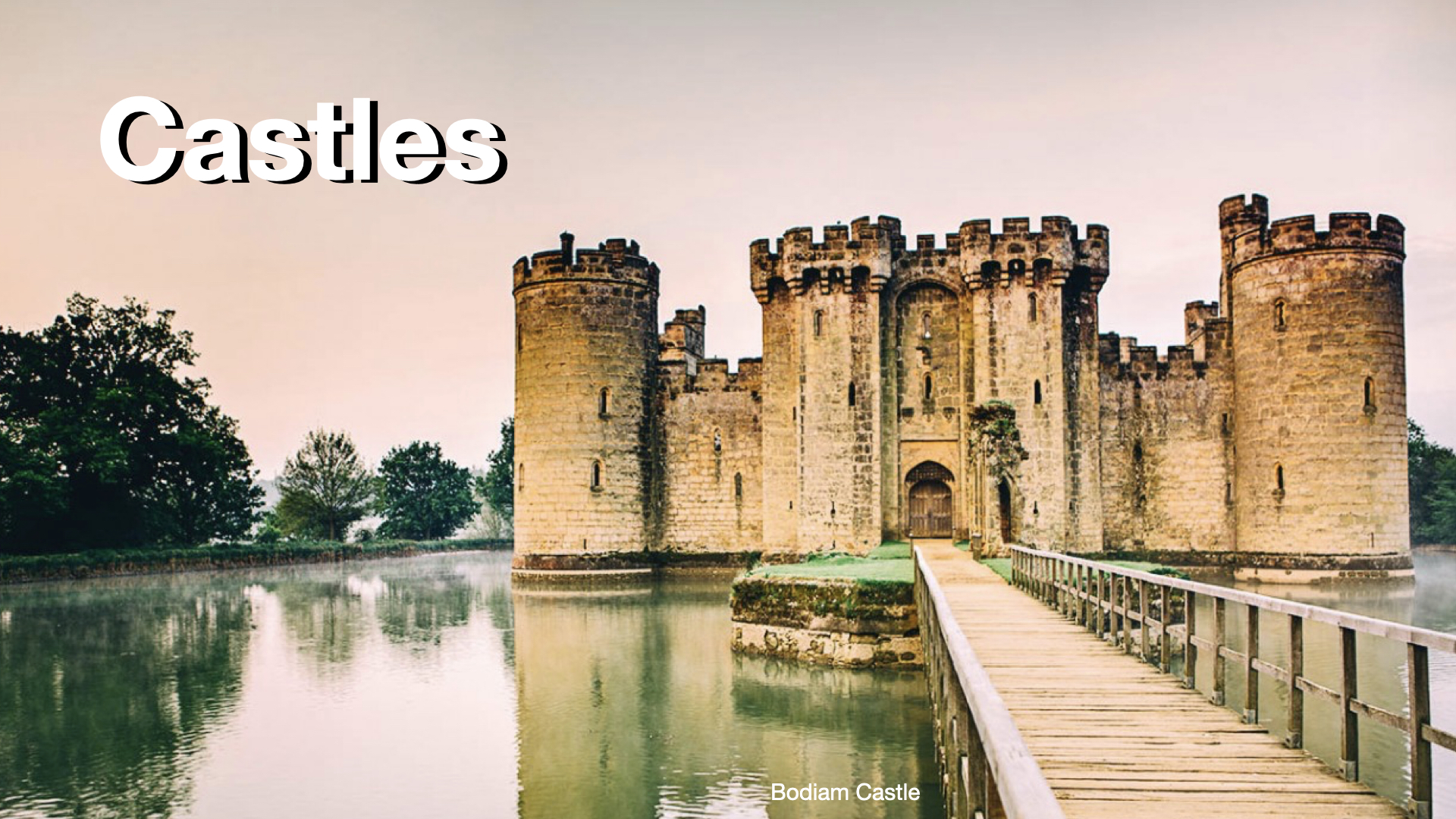
Castles stand as enduring symbols of medieval power, warfare and ingenuity. Across Europe and beyond, these magnificent structures tell stories of conquest, defence and daily life spanning nearly a thousand years.
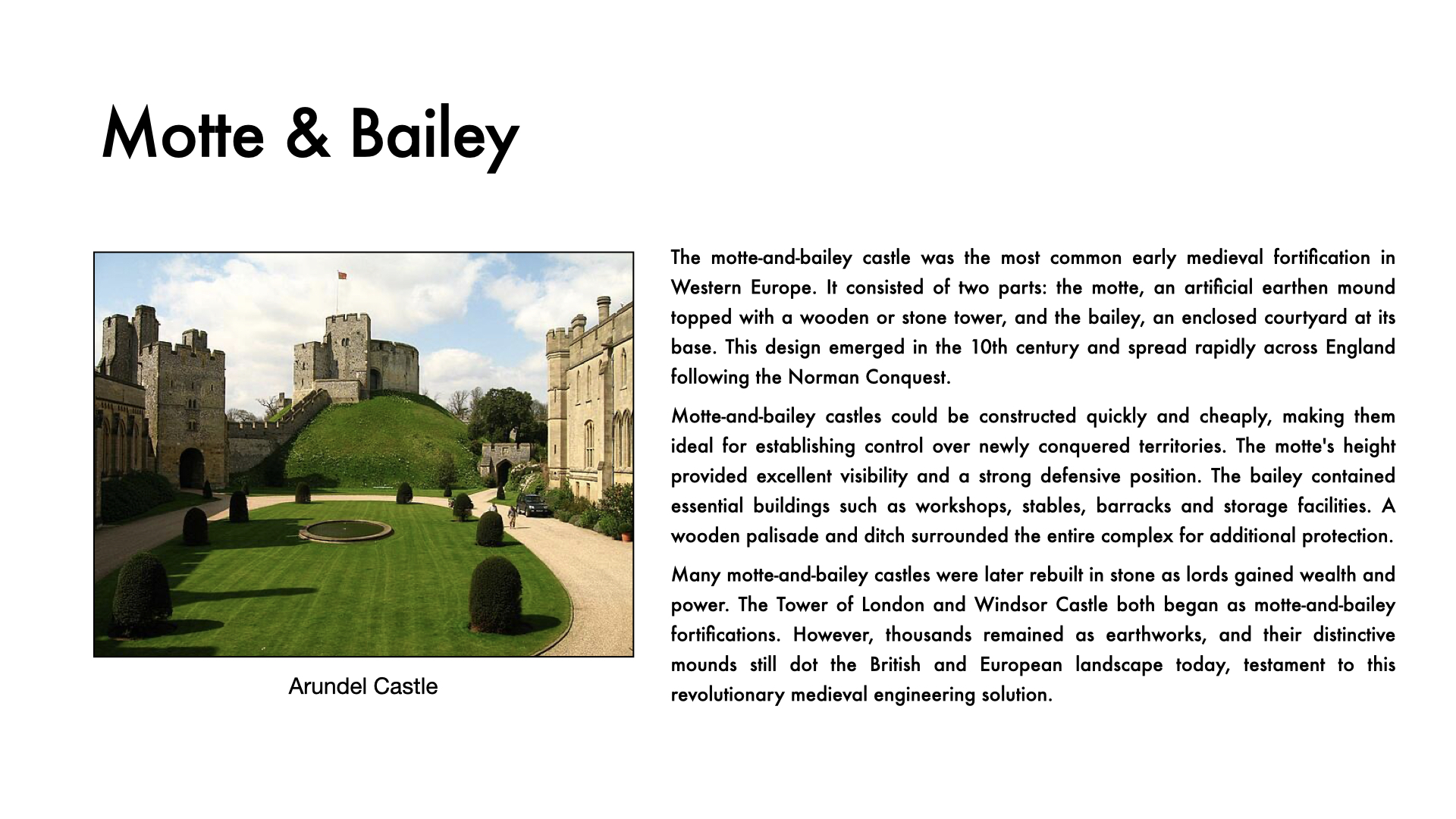
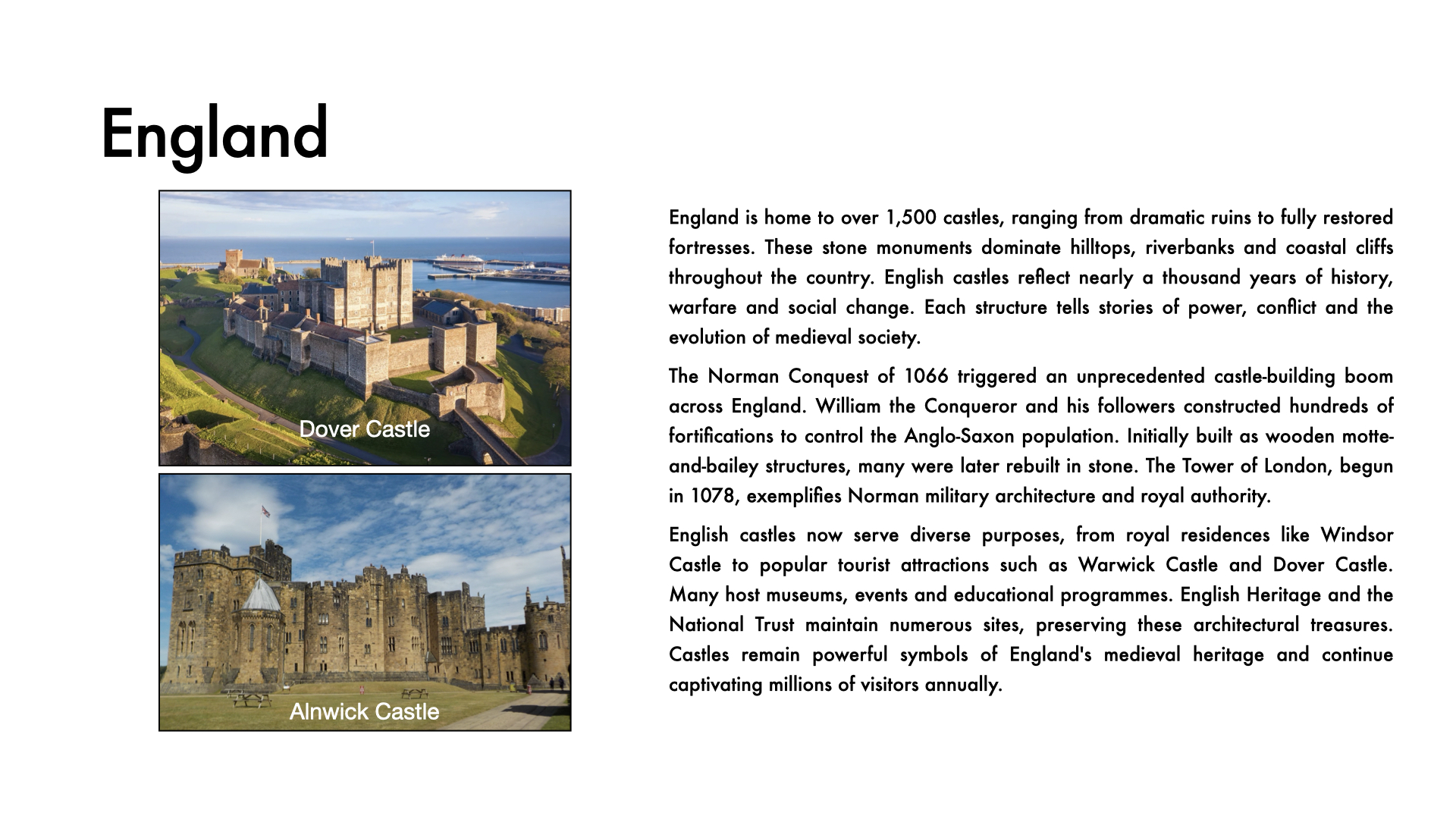
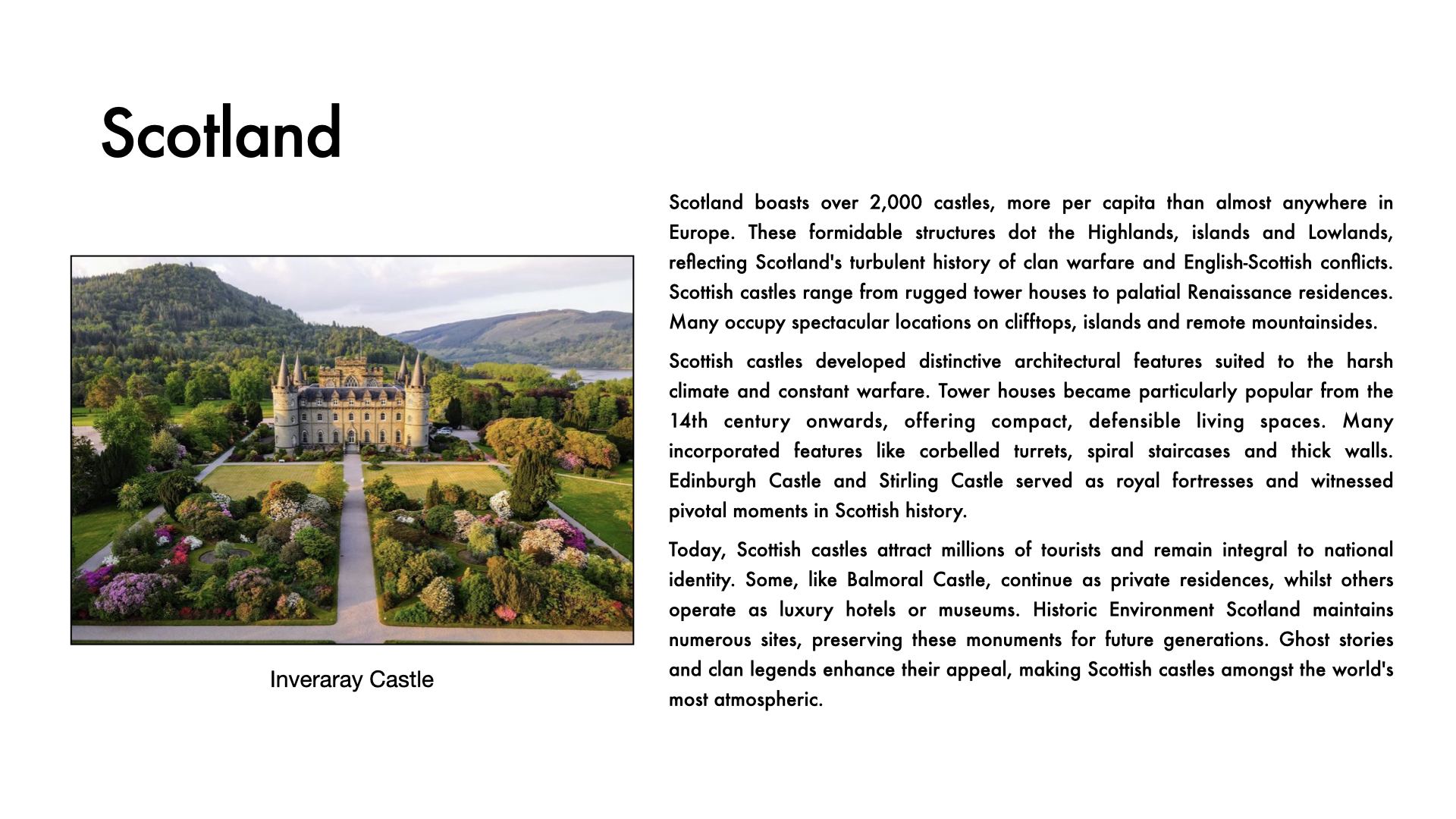
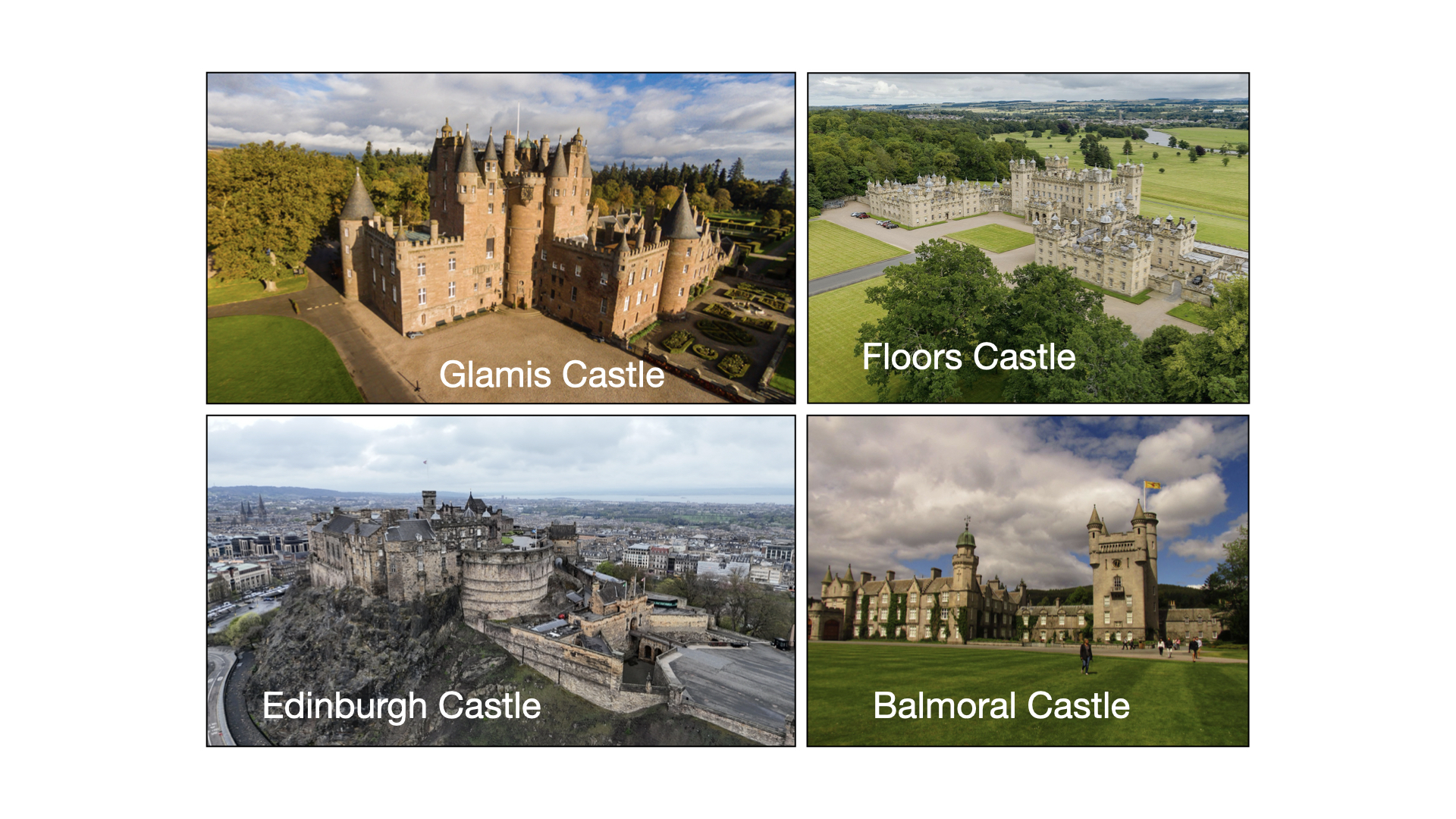
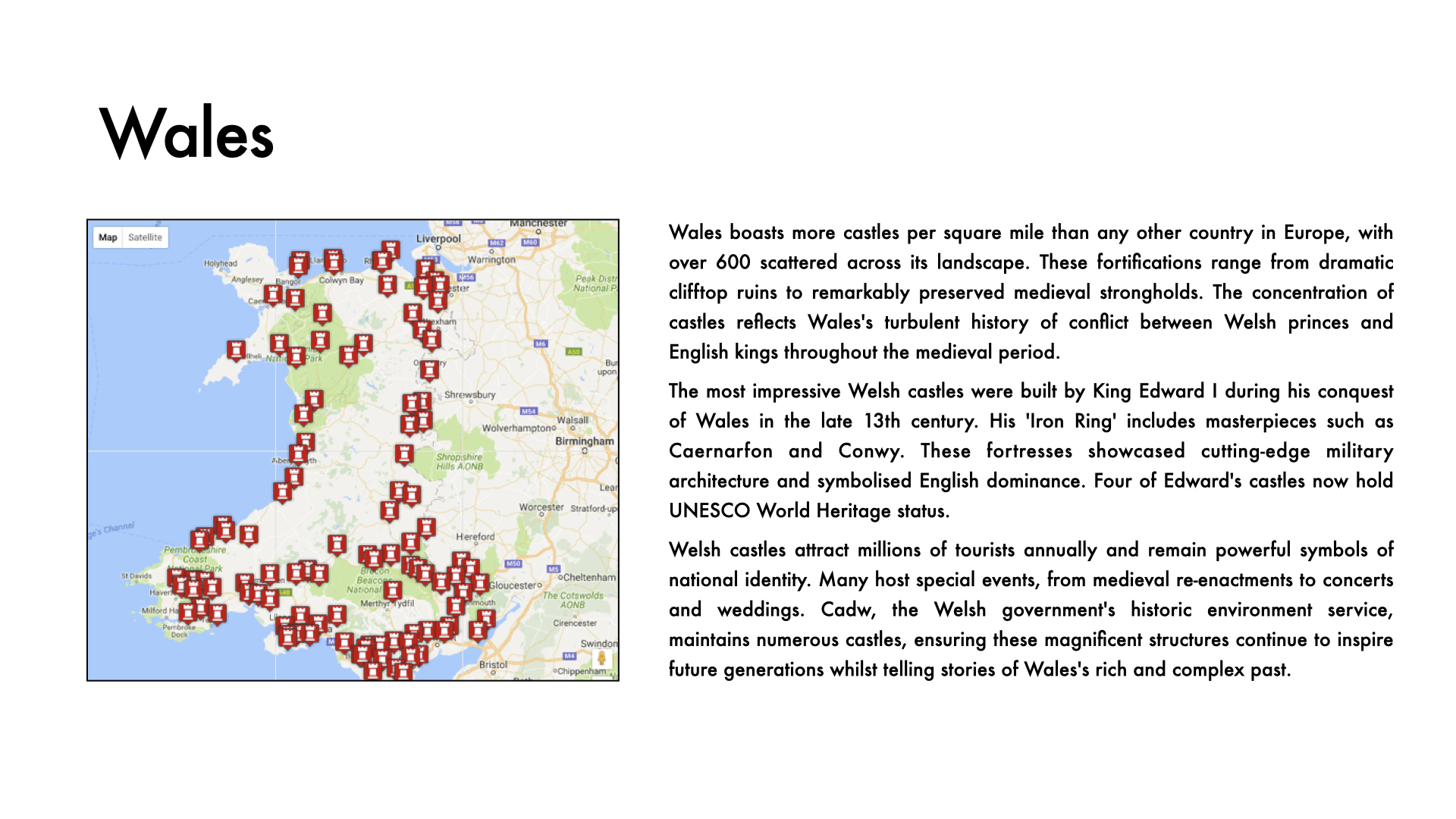
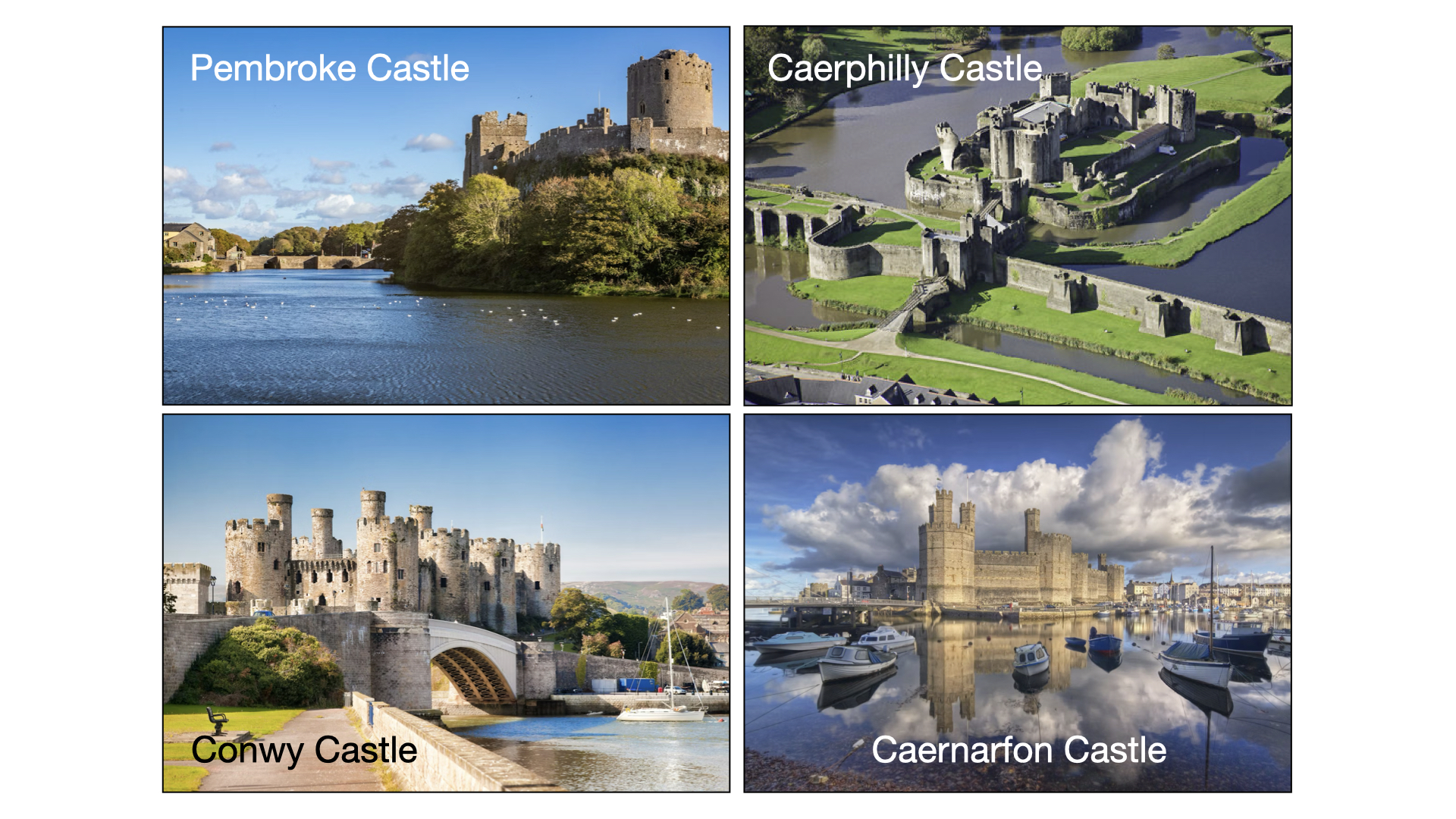
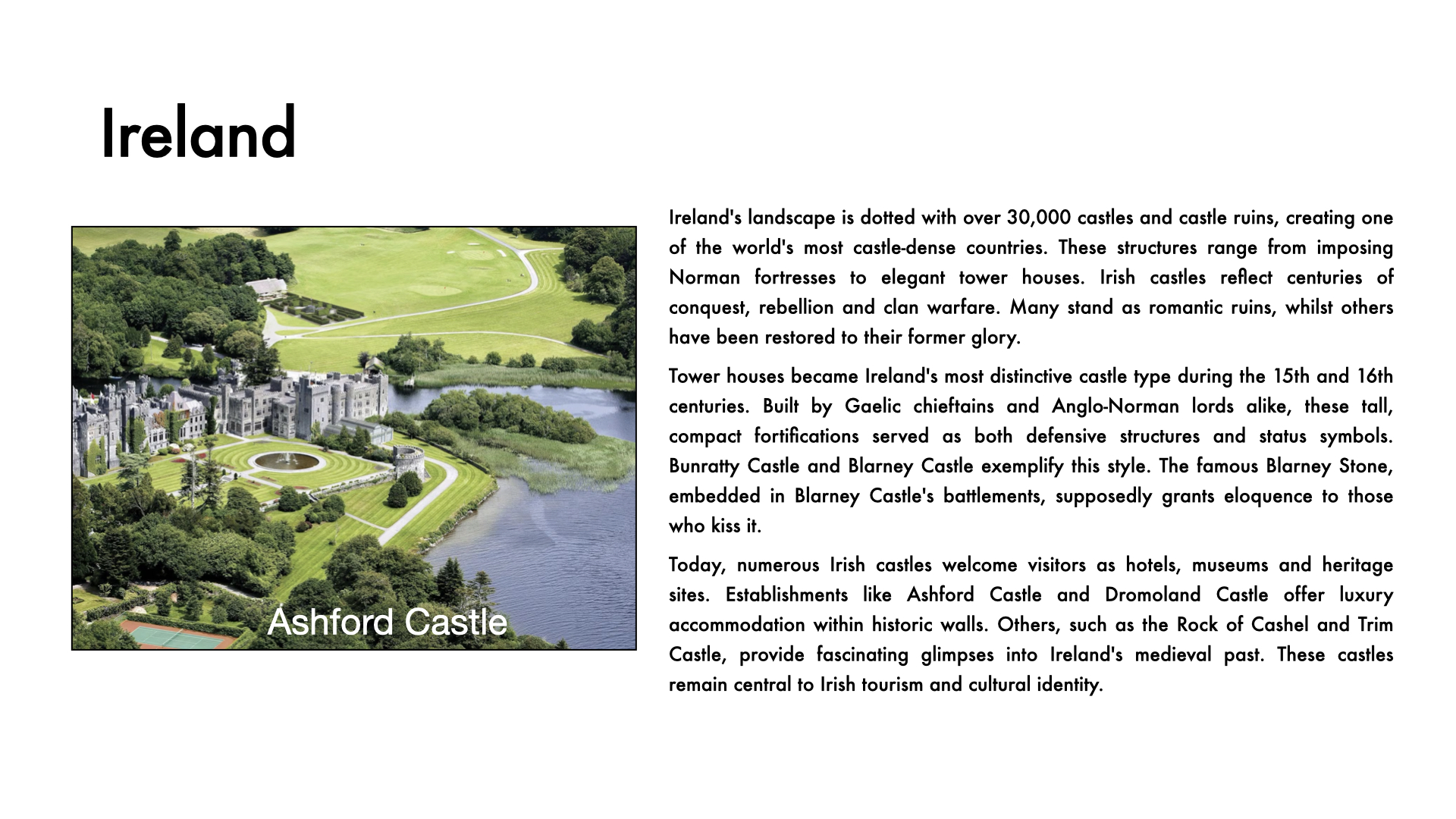
The castle-building boom began after the Norman Conquest of 1066. Early fortifications like motte-and-bailey castles could be constructed quickly using earth and timber, allowing conquerors to establish control over new territories. Over time, many were rebuilt in stone, evolving into the imposing fortresses we recognise today. Countries like Wales, Scotland, Ireland and England became dotted with thousands of castles, each serving as military strongholds, administrative centres and aristocratic residences.
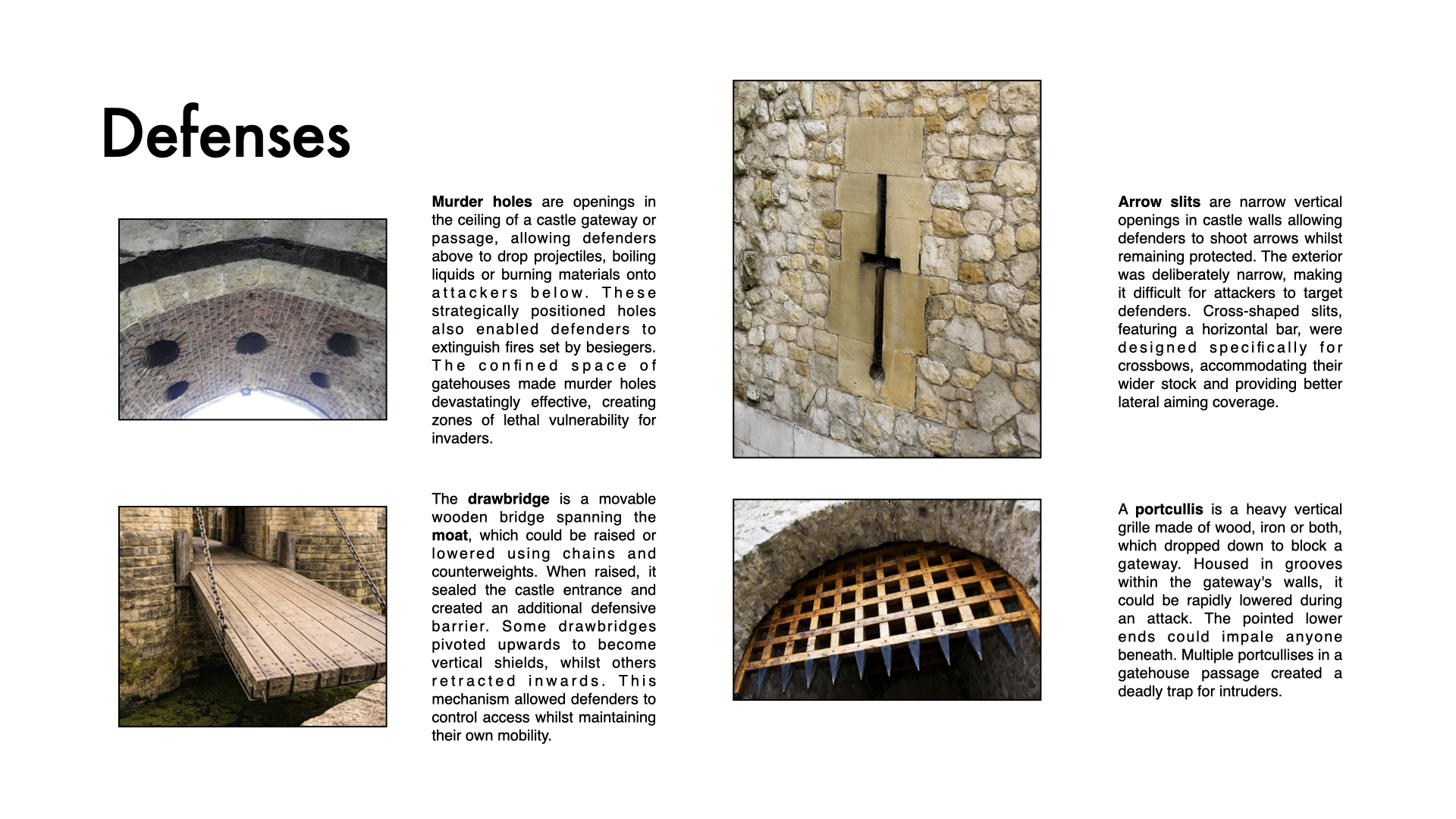
Castle architecture focused heavily on defence. Moats prevented easy approach, whilst drawbridges and portcullises controlled access through gateways. Murder holes allowed defenders to attack invaders from above, and arrow slits provided protected firing positions. Turrets offered elevated viewpoints and overlapping fields of fire. These defensive features made castles formidable obstacles for any attacking force.
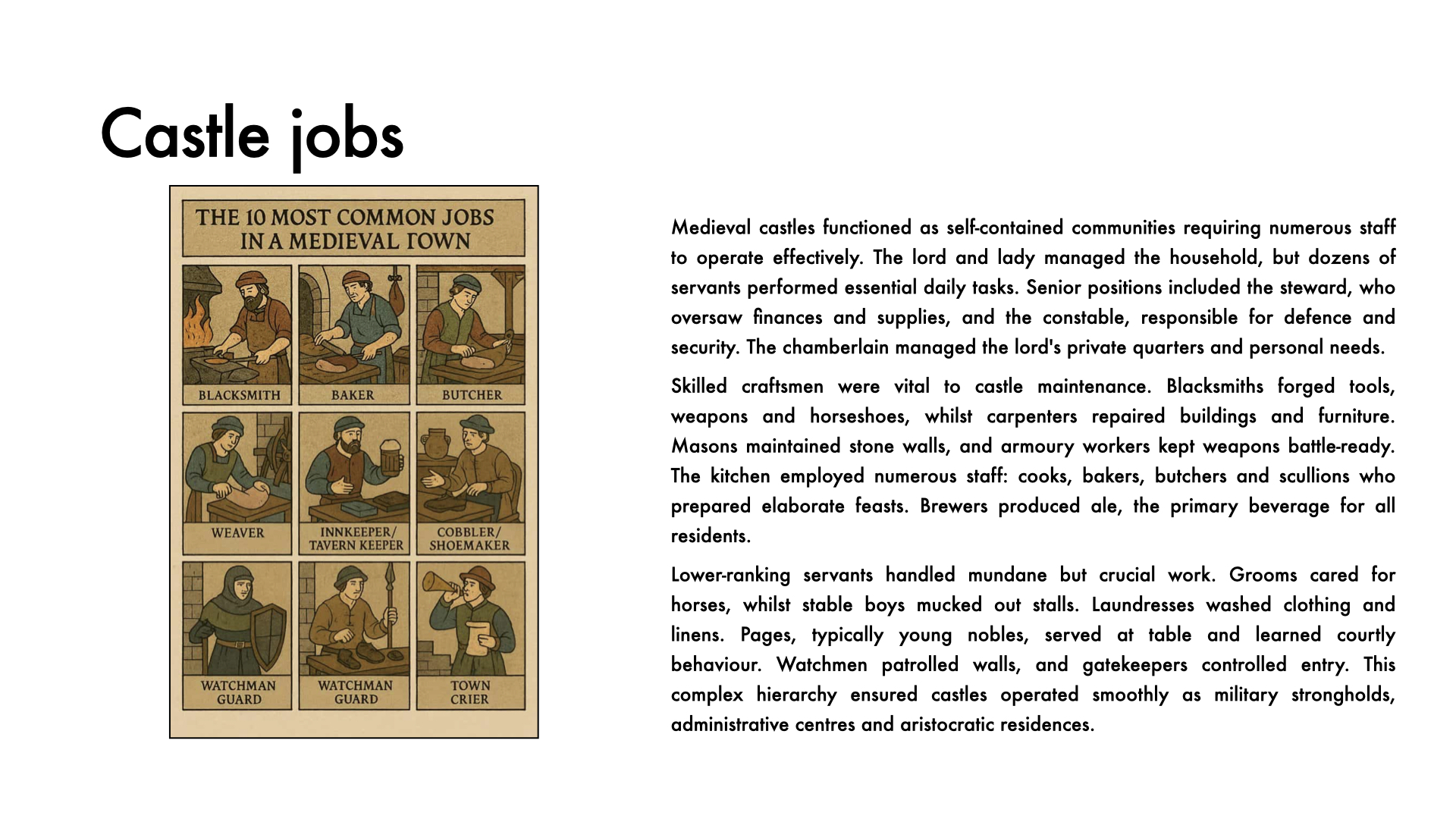
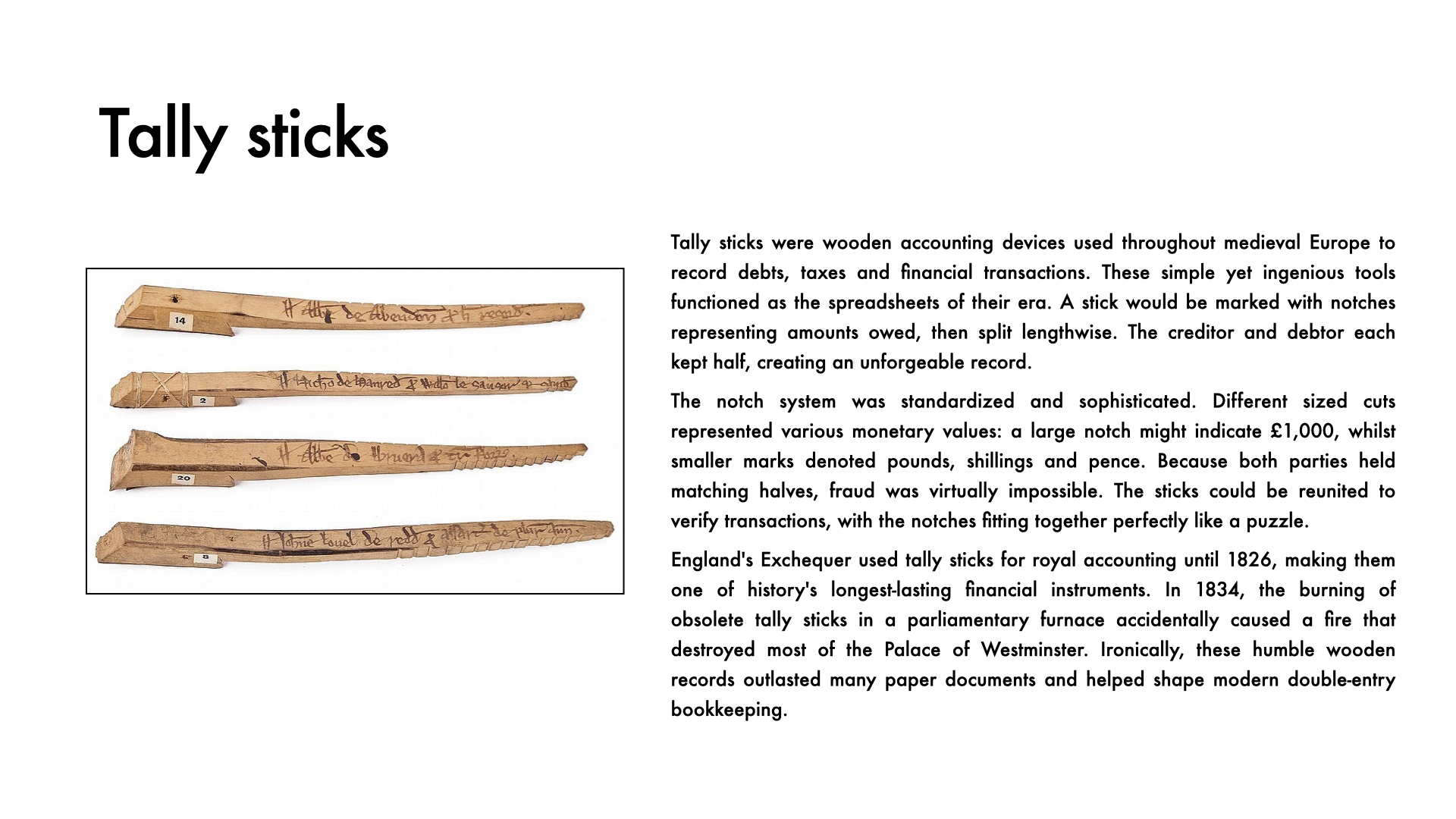
Beyond warfare, castles functioned as bustling communities. Dozens of staff maintained these self-contained worlds, from stewards managing finances to blacksmiths, carpenters and cooks. The great hall hosted feasts, whilst numerous servants ensured smooth daily operations. Even medieval accounting took place within castle walls, with tally sticks serving as wooden spreadsheets for tracking debts and taxes.
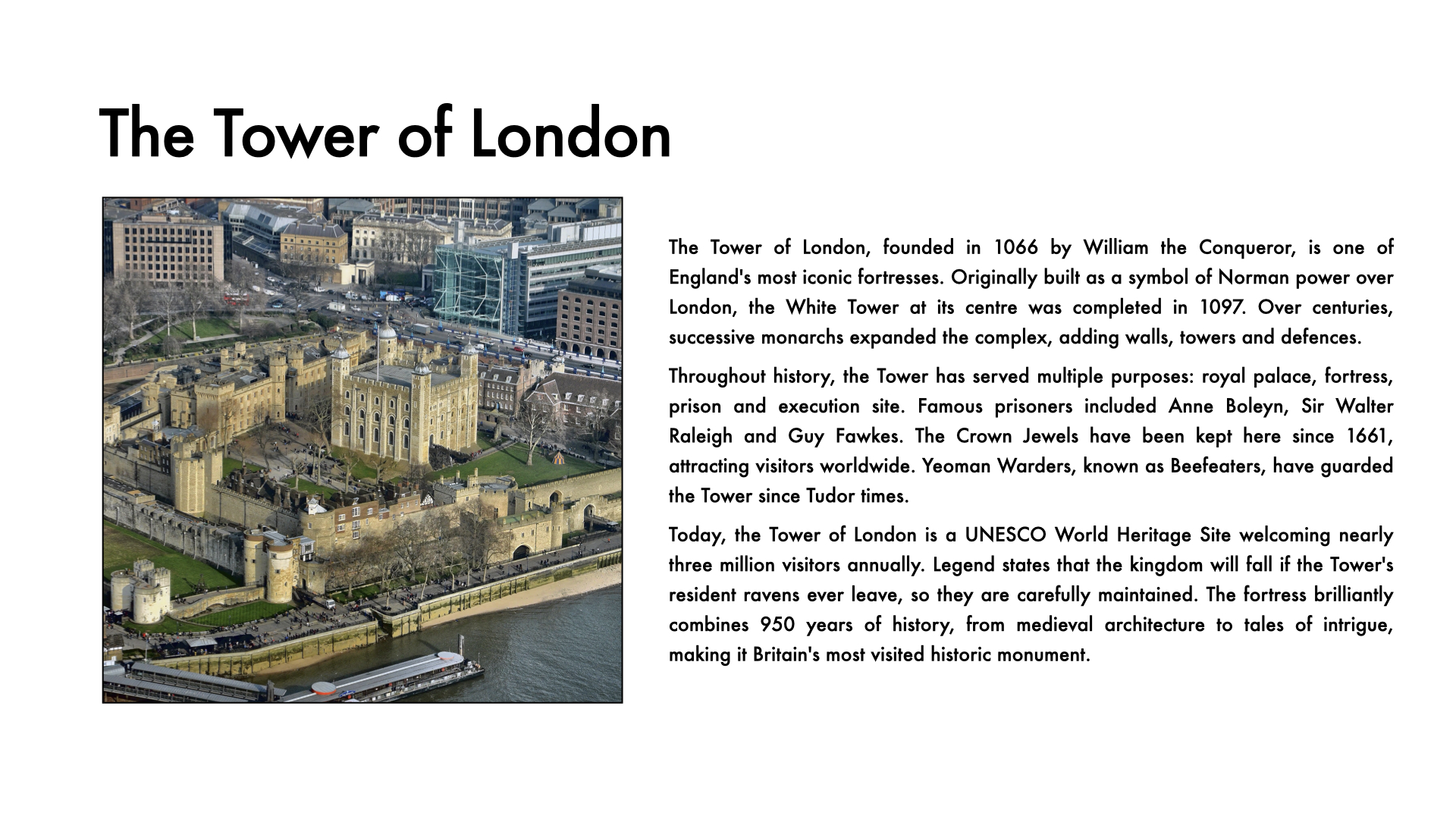
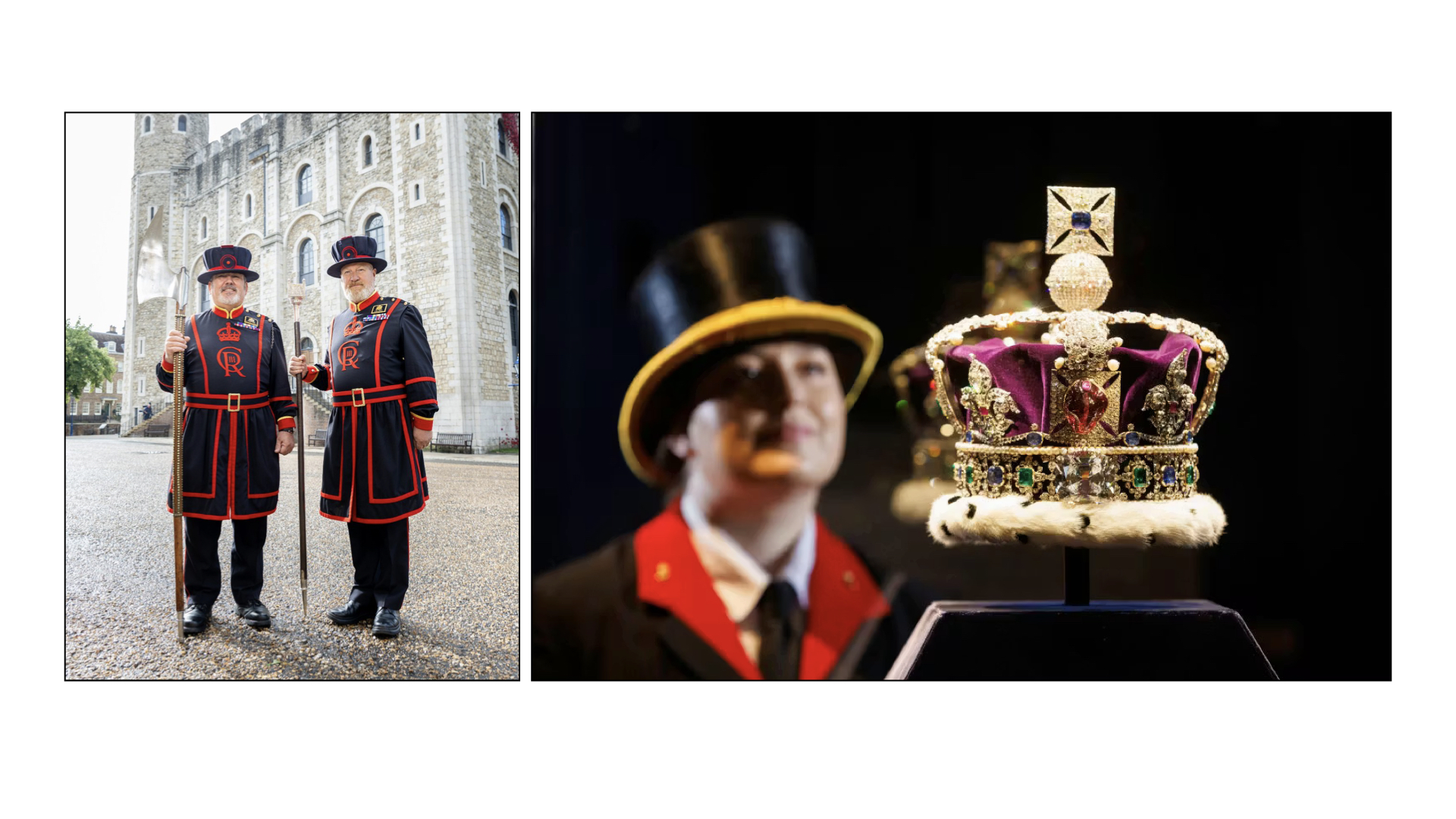
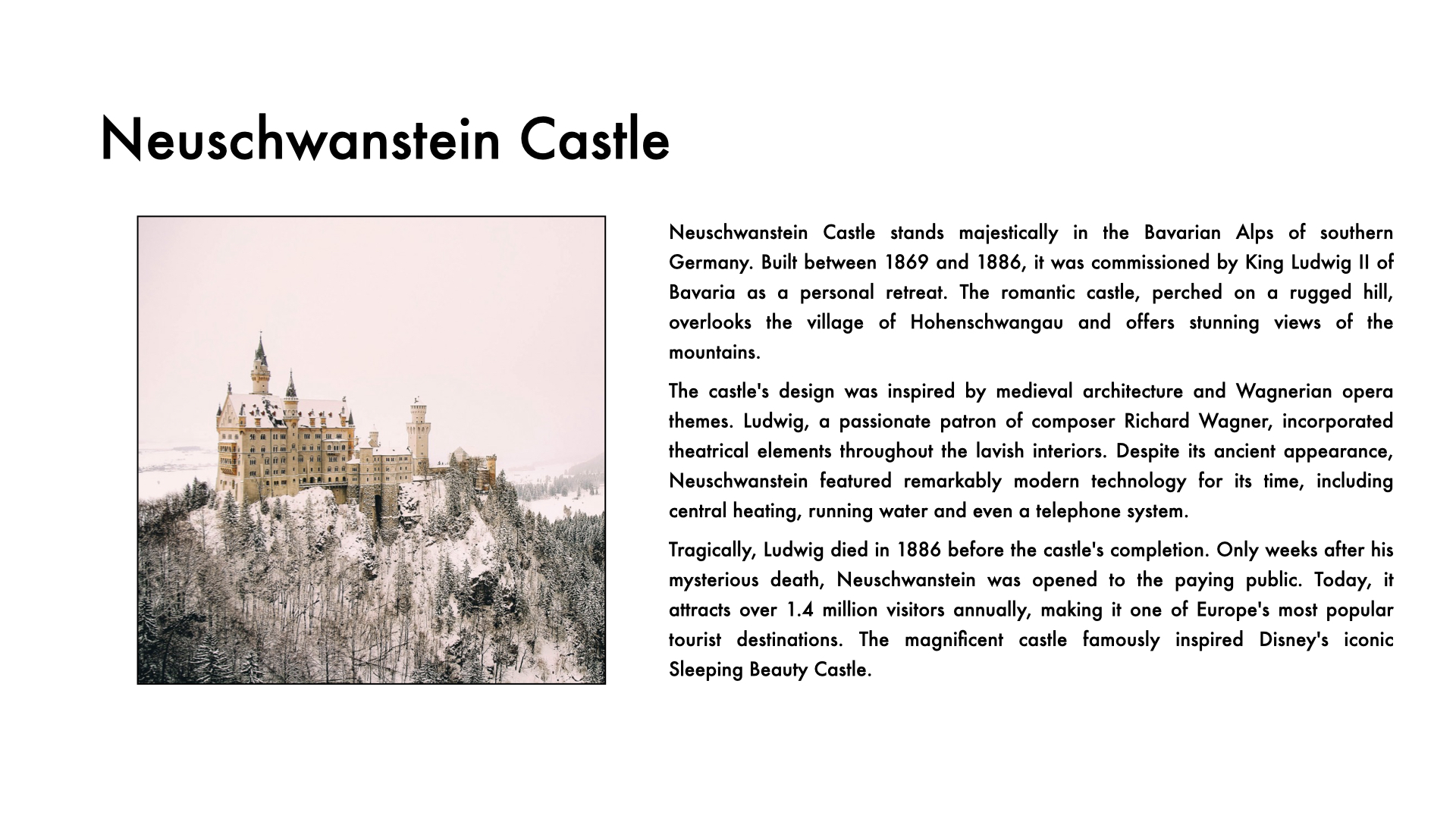
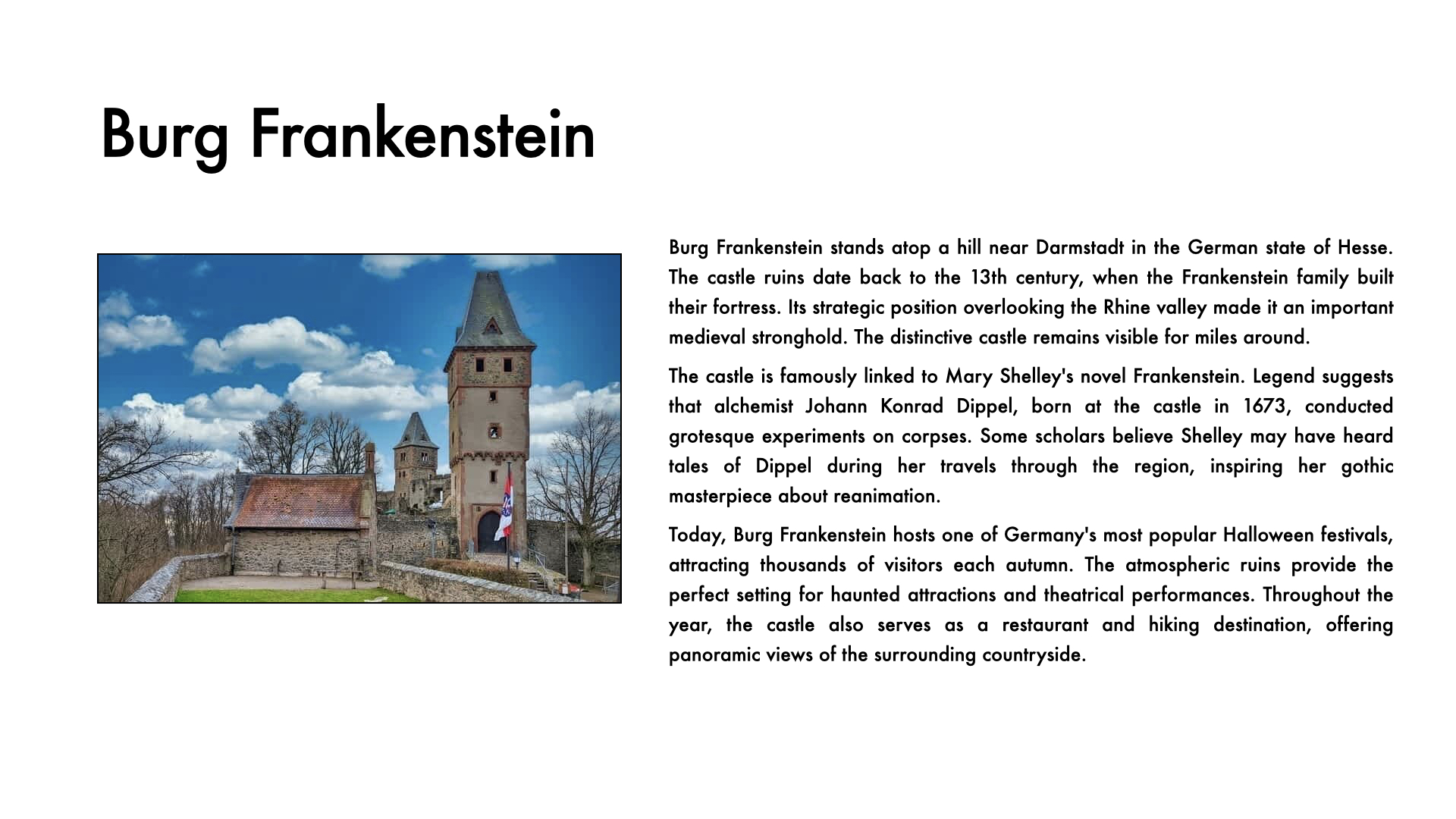
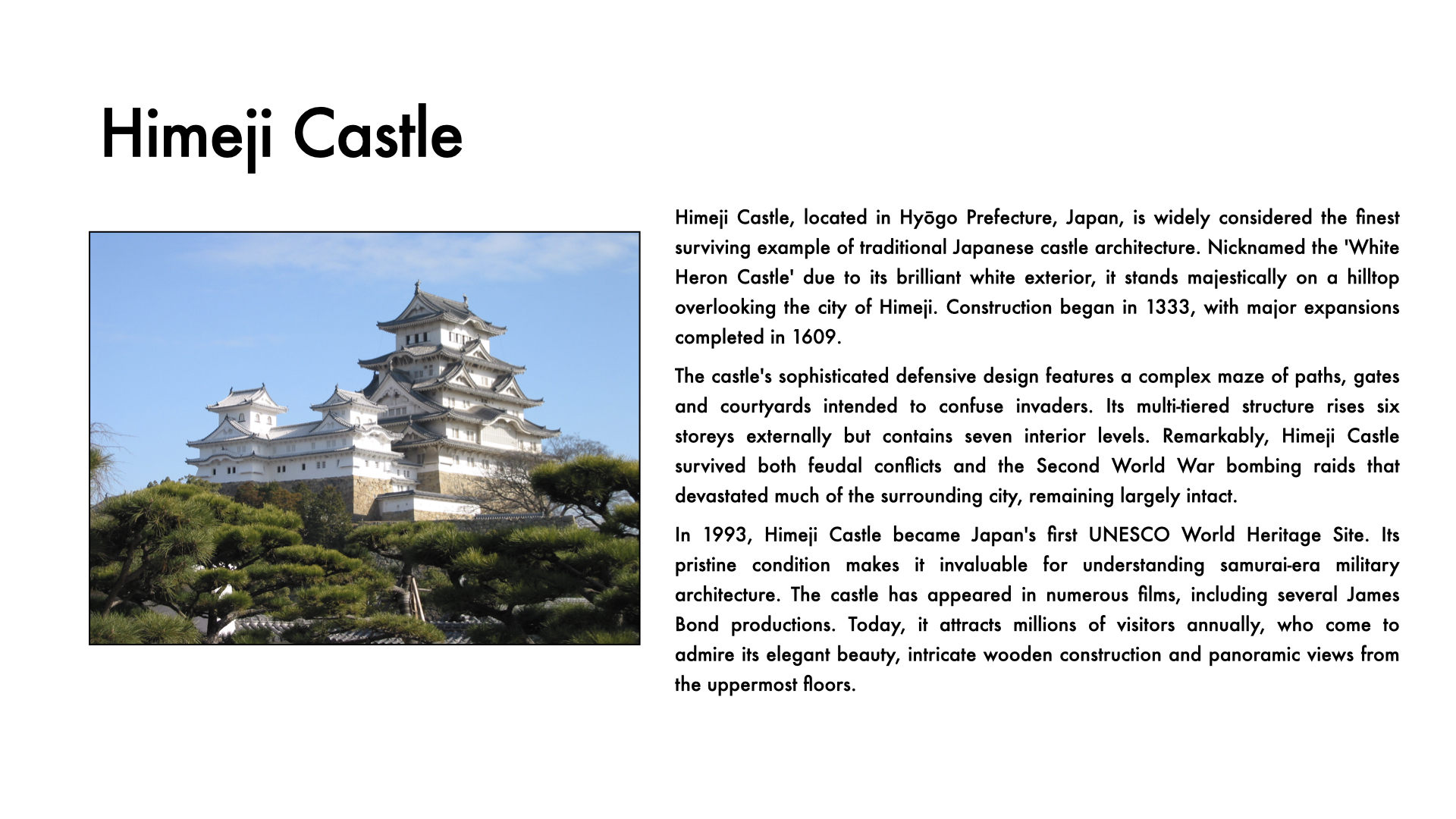
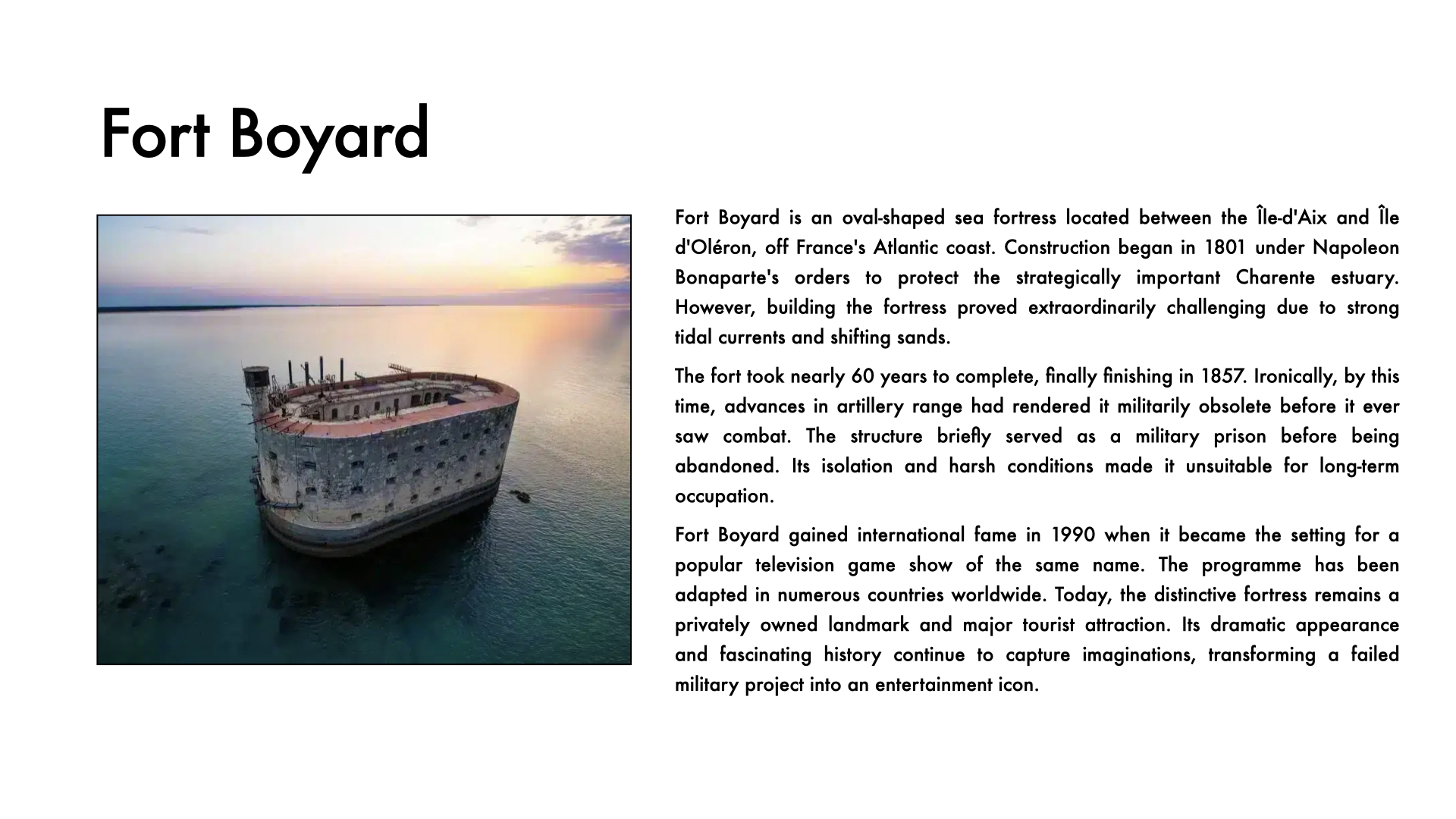
Famous castles worldwide showcase diverse architectural styles and histories. Germany's romantic Neuschwanstein inspired Disney's fairy tale castle, whilst Burg Frankenstein links to gothic horror legends. The Tower of London has served as palace, prison and treasury for nearly a thousand years. Japan's elegant Himeji Castle represents samurai-era perfection, and France's Fort Boyard transformed from failed fortress to television fame.
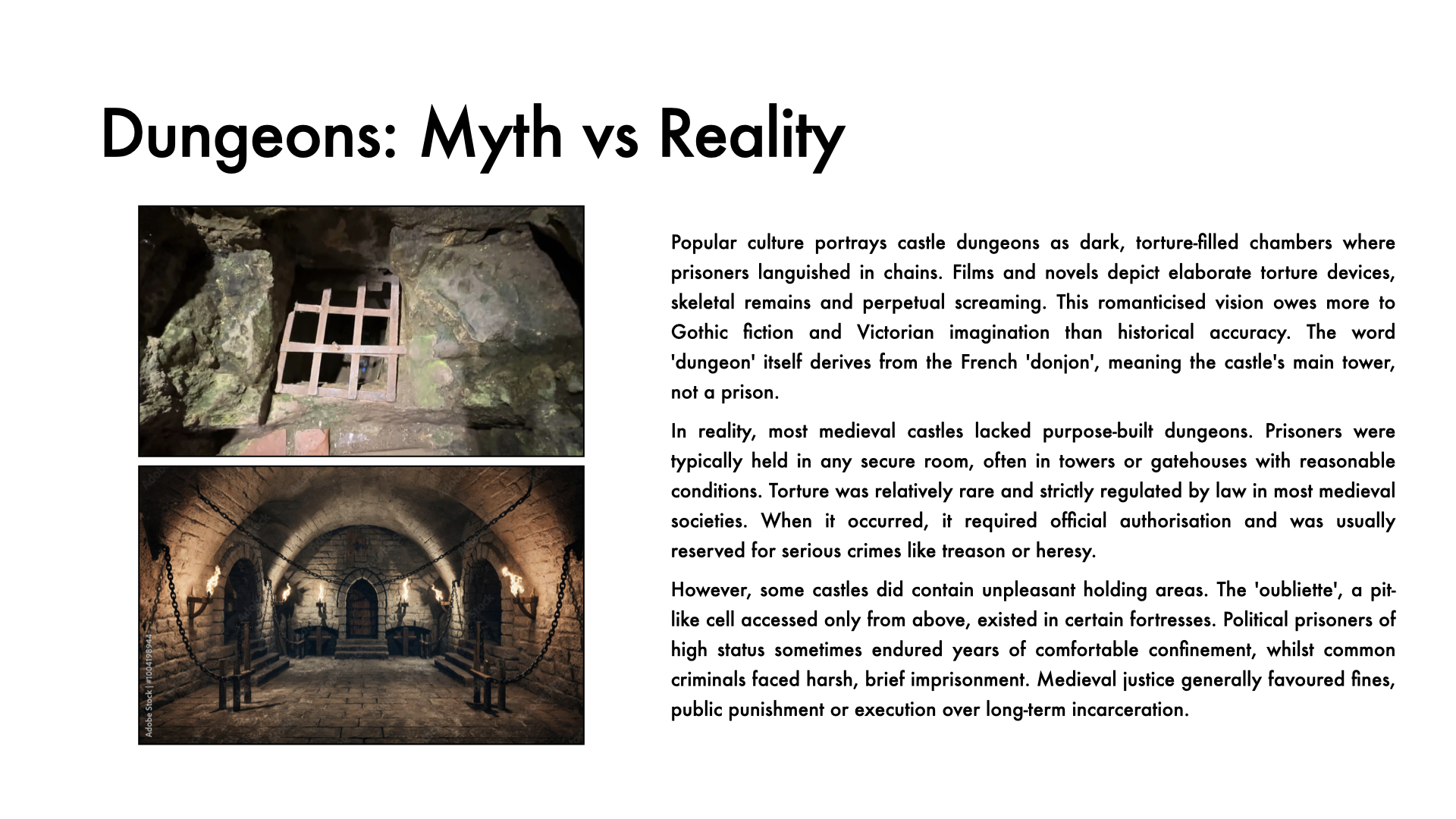
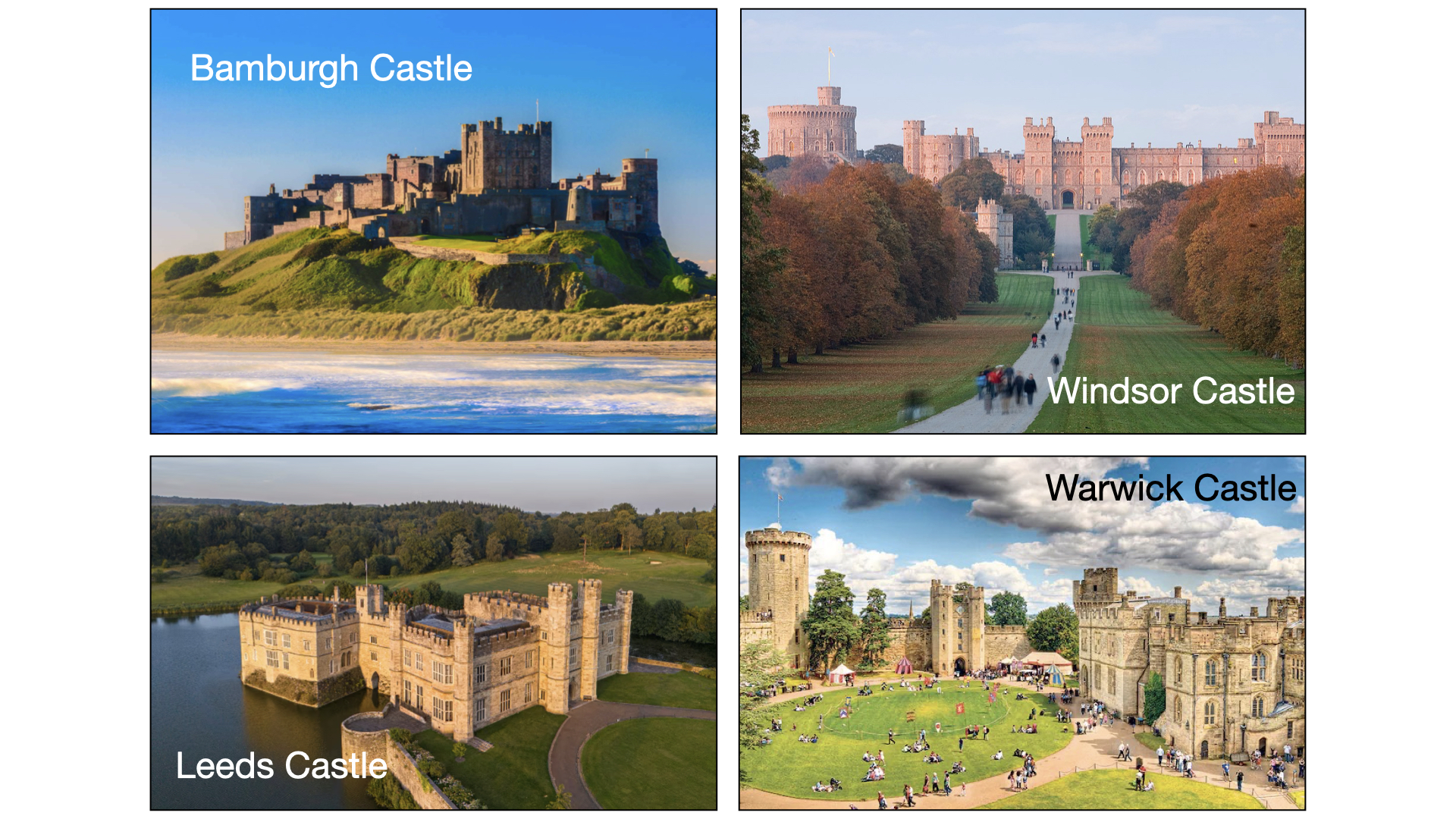
Popular myths about dungeons filled with torture devices often overshadow historical reality. Most castles lacked purpose-built prisons, and medieval justice rarely involved prolonged incarceration. Today, these magnificent structures attract millions of visitors annually, preserved as museums, hotels and heritage sites that continue inspiring imaginations worldwide.
📽️ Slideshow

📺 Video
🔑 Key Vocabulary
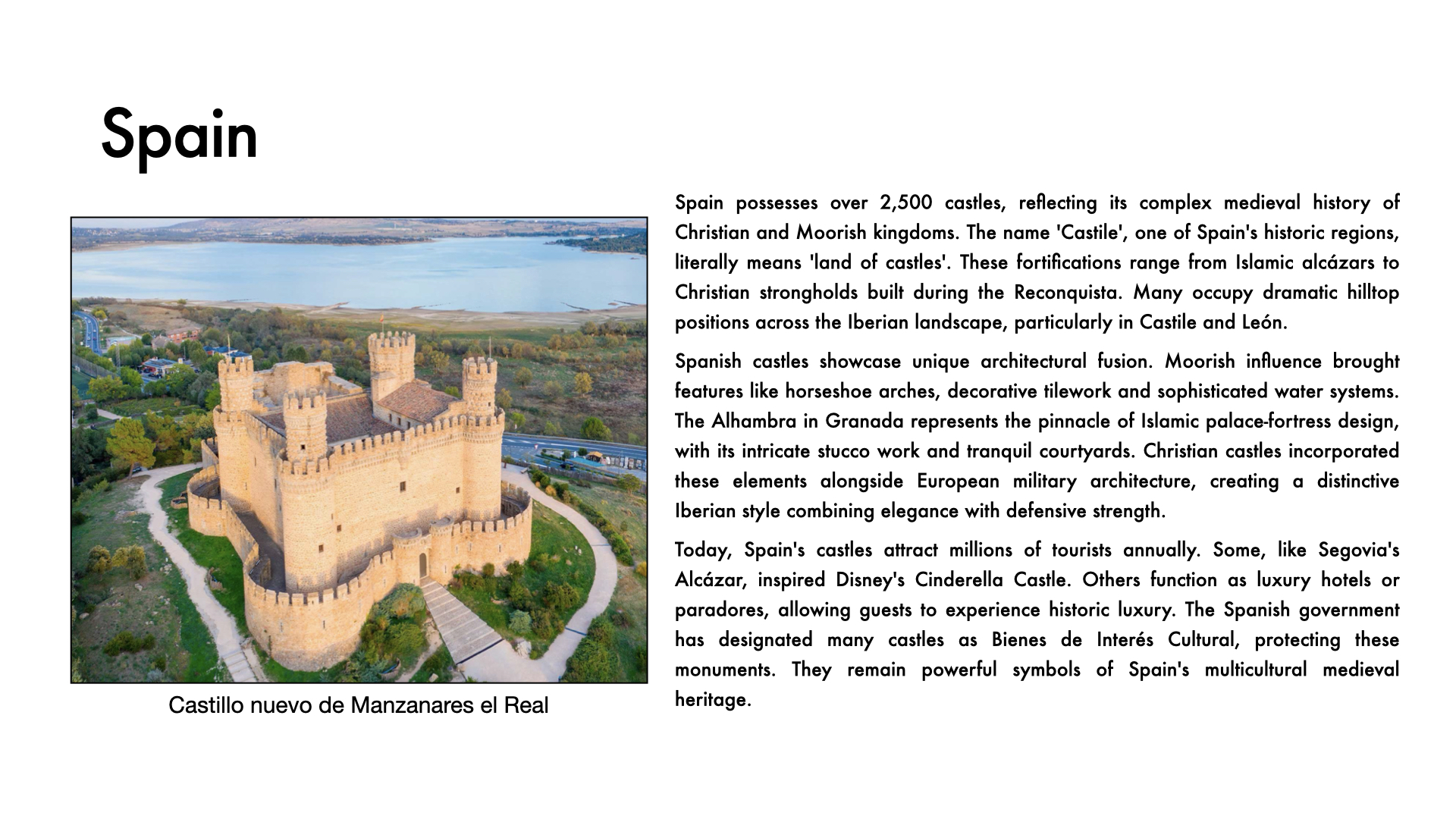
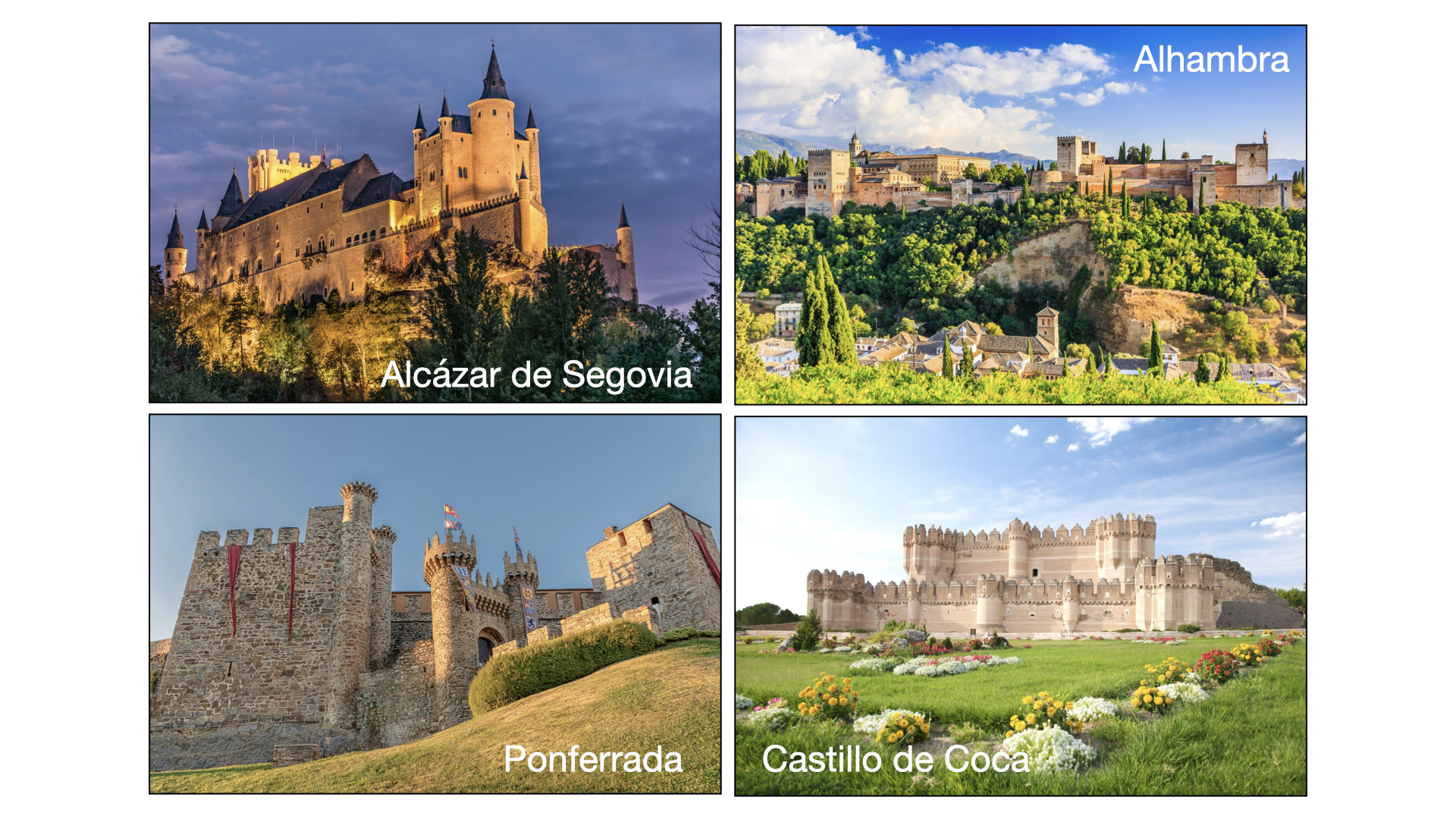
- Alcázar – a Spanish palace or fortress built during the period of Moorish rule.
- Archer – a soldier who fights using a bow and arrows.
- Arrow slit – a narrow vertical opening in a castle wall for shooting arrows through.
- Bailey – an enclosed courtyard within a castle's outer walls.
- Battlements – the defensive wall at the top of a castle with alternating high and low sections.
- Creditor – a person or institution to whom money is owed.
- Crossbow – a weapon that shoots short arrows (bolts) using a mechanical trigger.
- Debtor – a person who owes money to someone else.
- Drawbridge – a movable bridge over a moat that can be raised or lowered.
- Earthworks – large artificial banks or mounds of earth used for defence.
- Embrasure – an opening in a wall, wider on the inside, for shooting weapons through.
- Estuary – the wide part of a river where it meets the sea.
- Exchequer – the government department responsible for managing public money and accounts.
- Fortification – a defensive wall or building designed to protect against attack.
- Moat – a deep, wide ditch surrounding a castle, often filled with water.
- Motte – an artificial earthen mound with a tower on top.
- Murder hole – an opening in a gateway ceiling for dropping objects on attackers below.
- Obsolete – no longer useful or needed because something newer exists.
- Palisade – a strong fence made from wooden stakes, used for defence.
- Portcullis – a heavy iron or wooden grille that drops down to block a gateway.
- Reconquista – the period when Christian kingdoms gradually recaptured Spain from Moorish rule.
- Scullion – a servant who performed menial kitchen tasks like washing dishes.
- Siege – a military operation where an army surrounds a fortified place to force surrender.
- Splayed – widened or spread outwards from a narrow opening.
- Stronghold – a fortified place that is well defended and difficult to attack.
- Tally stick – a wooden stick with notches used to record financial transactions.
- Turret – a small tower projecting from a castle wall.
💬 Conversation Questions
- Why do you think castle-style architecture has remained fashionable in modern luxury homes?
- Do you think castles were built more for their military practicality or as symbols of power?
- Is it a problem when historical strongholds are turned into expensive private hotels?
- Can a government be truly responsible for its people while spending massive profits on fortifications?
- Would you visit a castle more often if the museum encouraged you to touch the artifacts?
- Do modern ruins like the Motte and Bailey show a real connection to history, or just a tourist image?
- Is it important to know the dark history of a castle’s dungeon before visiting it?
- Do you think functional defense, like a portcullis, is more interesting than a castle's appearance?
- Why do you think fantasy films and TV shows have helped popularise visiting medieval sites?
- Do you see historical preservation as a long-term cultural duty or just a passing trend?